Modern Signature: A Handwritten Font for Elegant Branding
I opened a blank Figma file last Tuesday, staring at the white void that every designer knows too well. The brief was simple but tricky: refresh the visual identity for a boutique skincare line that wanted to feel luxurious yet approachable. They didn’t want sterile minimalism, nor did they want overly ornate baroque flourishes. They wanted elegance with a pulse. That is when I pulled up Modern Signature, a captivating handwritten font from Script Amp that has been sitting in my resource folder, waiting for the right moment.
Dragging it onto the canvas immediately changed the mood of the project. With its fluid strokes and impeccable letterforms, this typeface adds a personal touch and authenticity that digital sans-serifs often struggle to achieve. It didn’t just sit there; it breathed life into the layout. In this review, I’ll walk you through how Modern Signature performed across various design assets—from logo drafts to packaging mockups—and share honest observations on where it shines and where it might need a helping hand.
The Personality Behind the Strokes
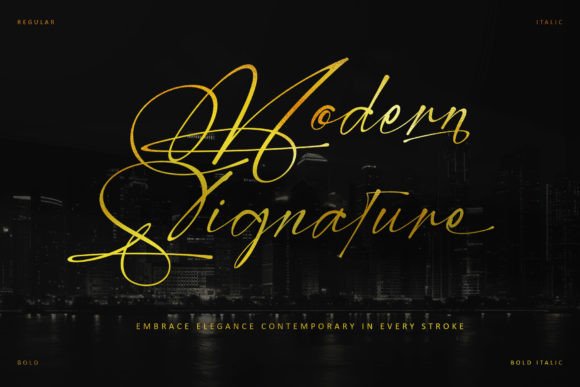
What strikes you first about Modern Signature is its balance. Many script fonts lean too heavily into either casual scribbles or rigid calligraphy, losing their soul in the process. Modern Signature avoids these extremes. It exudes elegance and sophistication without feeling pretentious. The letters connect with a natural rhythm, mimicking the pressure and release of a real pen on paper, yet maintaining the clean consistency required for modern branding.
This makes it an excellent choice for brands that want to communicate human-centric values. Whether you are designing for a handmade jewelry shop, a creative studio, or an artisanal bakery, the font brings a sense of craftsmanship. It feels like a signature—hence the name—implying that someone personally stood behind the product. This psychological cue is powerful in brand identity work, as it builds immediate trust and emotional connection with the audience.
Testing in Real-World Branding Scenarios
To truly understand a typeface, you have to break it. So, I took Modern Signature out of the safe zone of digital screens and applied it to a realistic set of design assets. Here is how it held up.
Logo Design and Wordmarks
In logo design, legibility is king. I tested Modern Signature as a standalone wordmark for a fictional café concept. At larger sizes, it looked stunning. The ligatures were smooth, and the ascenders and descenders gave the logo a dynamic vertical rhythm. However, I found that it works best as a primary logotype rather than a small icon. When scaled down to favicon size, the fine details of the handwriting style can get lost. For a full logo system, I used Modern Signature for the main name and paired it with a clean sans serif font for the tagline, creating a perfect hierarchy between personality and clarity.
Packaging and Product Labels
This is where Modern Signature truly excelled. On a cosmetic jar mockup, the font added a layer of premium quality. The fluid strokes complemented the soft curves of the bottle, creating a cohesive visual language. Because it is a creative font with distinct character, it stands out on crowded shelves. I noticed that it performs exceptionally well on product labels where space is limited but impact is needed. It draws the eye without shouting, guiding the consumer’s attention to the brand name naturally.
Web Design and Social Media Graphics
For web design, I placed Modern Signature in the hero section header. It provided a striking contrast against the minimalist background, acting as a focal point. However, for body text or navigation menus, it would be overwhelming. I restricted its use to headlines and short phrases. Similarly, for social media graphics, such as Instagram posts or Pinterest pins, the font adds an editorial flair. It transforms a standard template into something that looks custom-made. Just remember to leave ample negative space around the text; the organic shapes of the letters need room to breathe.
Font Pairing and Versatility
No font exists in isolation, and Modern Signature is no exception. To maximize its effectiveness, thoughtful font pairing is essential. Since Modern Signature is a handwritten font with strong personality, it pairs beautifully with neutral, structured typefaces.
- Sans Serif Fonts: Pairing it with a geometric sans serif creates a modern, balanced look. The contrast between the organic script and the rigid geometry highlights the uniqueness of both typefaces. This combination is ideal for tech-savvy lifestyle brands or contemporary fashion labels.
- Serif Fonts: For a more classic, editorial design approach, pair Modern Signature with a high-contrast serif font. This evokes a sense of tradition and luxury, perfect for wedding stationery, high-end cosmetics, or heritage-inspired brands.
- Other Script Fonts: While it can stand alone, using another subtle script font for accents requires caution. Stick to simpler scripts to avoid visual clutter.
When building a modern typography system, treat Modern Signature as your display font or accent font. Use it for titles, quotes, and key messages. Let supporting typefaces handle the heavy lifting of information delivery.
Technical Details and Usability
From a technical standpoint, Modern Signature offers a robust set of features that designers appreciate. It includes multiple weights and styles, allowing for flexibility in visual hierarchy. The inclusion of alternates and swashes gives you the freedom to customize the look without breaking the flow. These features are particularly useful in editorial design and poster creation, where unique typographic arrangements can elevate the aesthetic.
The file formats included are standard and compatible with most design software, ensuring a smooth workflow. If you plan to use it on the web, check if webfont versions are available to ensure consistent rendering across browsers. Multilingual support is also a plus if your brand targets international audiences, though you should always verify specific character coverage for your needs.
Limitations and Best Practices
While Modern Signature is versatile, it is not a one-size-fits-all solution. It is not suitable for long body text. Reading paragraphs of handwritten-style text can cause eye strain and reduce comprehension. Keep it reserved for short copy: headlines, captions, buttons, and logos.
Additionally, consider the context of your brand. For formal corporate communications, legal documents, or industries requiring strict neutrality (like healthcare or finance), this font may feel too informal or decorative. It is best suited for creative industries, lifestyle brands, and businesses that value personal connection over institutional rigidity.
Final Thoughts for Designers
After spending weeks integrating Modern Signature into various projects, I am convinced that it is a valuable addition to any designer’s toolkit. It bridges the gap between traditional calligraphy and modern digital aesthetics, offering a sophisticated yet accessible look. Whether you are a freelance graphic designer looking to add flair to client proposals, an entrepreneur branding your online shop, or a marketer crafting engaging social media content, Modern Signature delivers.
Before committing to the font for final production, always test it in context. Print it out, view it on different devices, and observe how it interacts with other design elements. And please, do remember to review the commercial font licensing agreement before using the font in client work, merchandise, or print-on-demand products. Ensuring you have the proper rights protects both your creativity and your business.
In a market saturated with generic templates, Modern Signature offers a way to inject genuine personality into your brand identity. It reminds us that typography is not just about conveying information—it is about setting a tone, telling a story, and leaving a lasting impression.